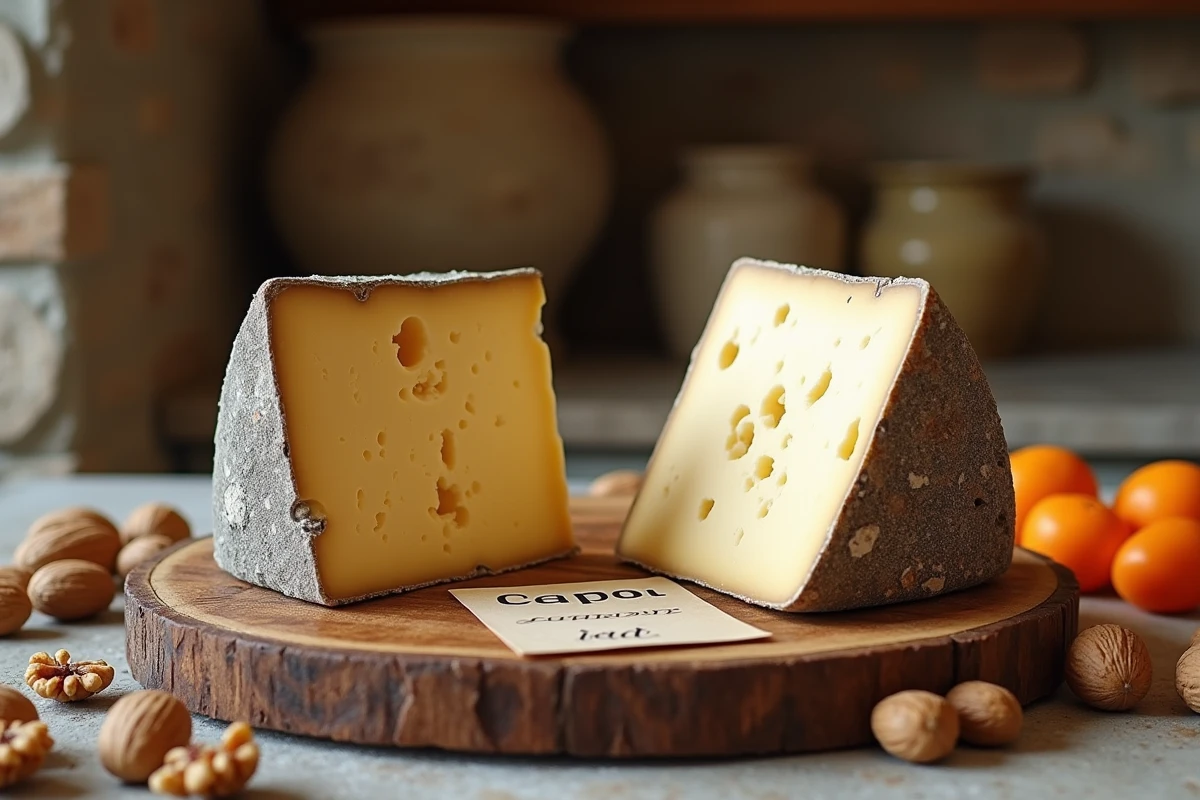
In front of a cheese platter, Cantal and Comté can sometimes look remarkably similar. Same straw-yellow hue, same imposing shape, same cow’s milk. Confusing them is a classic mistake, even among seasoned enthusiasts. However, these two AOP cheeses tell stories of terroirs, techniques, and flavors that are radically different.
Production of Cantal and Comté: two opposing logics
Have you ever noticed that some cheeses cut into clean slices while others crumble under the knife? This texture reveals a distinctly different production process.
Cantal belongs to the family of unpressed cooked cheeses. The curd is cut, pressed for the first time, then ground and salted in the mass before a second pressing. This double mechanical process results in a dense, slightly crumbly paste, similar to cheddar in its structure. The production takes about 33 hours before the aging process begins.
Comté, on the other hand, is a cooked pressed cheese. The curd is heated to a high temperature in large copper vats, then molded into wheels that can weigh over 40 kilograms. This cooking fuses the curd grains together and produces a soft, melting, elastic texture. Both cheeses use raw cow’s milk, but the cheesemaker’s technique diverges from the very first minutes.
The differences between Cantal and Comté therefore begin well before the aging cellar, right from the production vat.
Auvergne terroir versus Jura mountains: the milk tells a different story
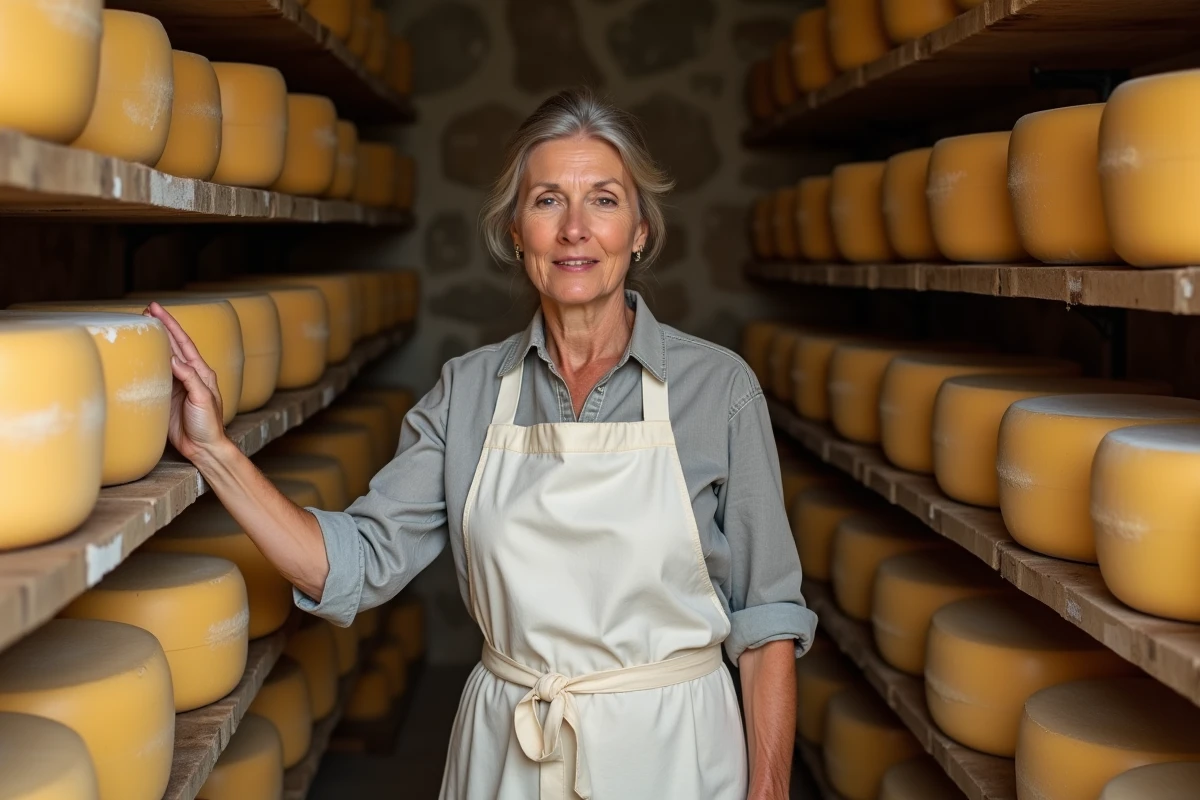
Cantal originates in the volcanic region of Auvergne, on pastures rich in grasses and mid-mountain flora. The cows (mainly of the Salers breed) graze in summer pastures where the vegetation varies according to altitude and exposure. This milk produces earthy aromas, sometimes slightly milky, with notes that evolve towards the animal in late summer.
Comté is made in Franche-Comté, in the Jura massif. Montbéliarde or Simmental cows graze on high-altitude pastures dotted with wildflowers and legumes. This diverse forage gives milk with characteristic floral and fruity aromas.
Recent studies from INRAE and the Institute of Livestock, presented at the Aurillac Cheese Days 2022, show that climate change is already altering these profiles. Longer droughts in Auvergne are making forages less diverse, accentuating the animal notes of Cantal. In the Jura, the decline of certain legumes and aromatic flowers is resulting in Comtés that are slightly more caramelized and less floral than in the past.
Aging of Cantal and Comté: durations, cellars, and taste results
Aging is the moment when each cheese develops its own character. And the two AOPs do not apply the same logic of time at all.
Cantal: three distinct aging profiles
- Young Cantal (aging of one to two months): soft paste, mild and buttery taste, slightly tangy. Ideal melted or in a sandwich.
- Intermediate Cantal (three to seven months): the paste firms up, and the aromas become more pronounced with notes of cellar and hazelnut.
- Old Cantal (beyond eight months): dry and crumbly texture, powerful, sharp flavor, with marked animal notes. A characterful cheese that divides opinions.
Comté: an aromatic palette that unfolds over time
The AOP specifications require a minimum aging of four months, but the majority of Comtés sold far exceed this threshold. Since the early 2020s, several dairies have extended their standard aging periods, moving from twelve to fourteen or sixteen months for their core range.
A young Comté offers milky and buttery notes. Around twelve months, aromas of dried fruits and toasted notes appear. Beyond eighteen months, Comté develops complex flavors of caramel, broth, and sometimes chocolate. Exceptional wheels aged twenty-four months or more reach an aromatic richness that few French cheeses can match.

Taste of Cantal or taste of Comté: knowing how to choose according to use
Young Cantal melts well and integrates into gratins, revamped tartiflettes, or hot sandwiches. Its discreet flavor does not overpower other ingredients. Old Cantal, on the contrary, is enjoyed on its own or with rye bread and a red wine from the Rhône valley.
Comté is more versatile on a cheese platter. Its soft texture cuts easily, and its complex aromas pair well with both Jura yellow wine and Chardonnay. In cooking, it adds creaminess and depth to fondues and soufflés.
Here are the key points to remember:
- For melting in cooking: young Cantal or Comté aged six to ten months
- For a varied cheese platter: Comté aged a minimum of twelve months and intermediate Cantal
- For character lovers: old Cantal or Comté over eighteen months
- For a pairing with dry white wine: Comté wins, its fruity aromas create a natural dialogue
The choice between these two AOP cheeses depends as much on the planned dish as on personal taste. Cantal charms with its rustic straightforwardness, while Comté captivates with its gradual complexity. Both deserve a regular place on the table, provided their aging duration is respected and they are taken out of the refrigerator half an hour before tasting.