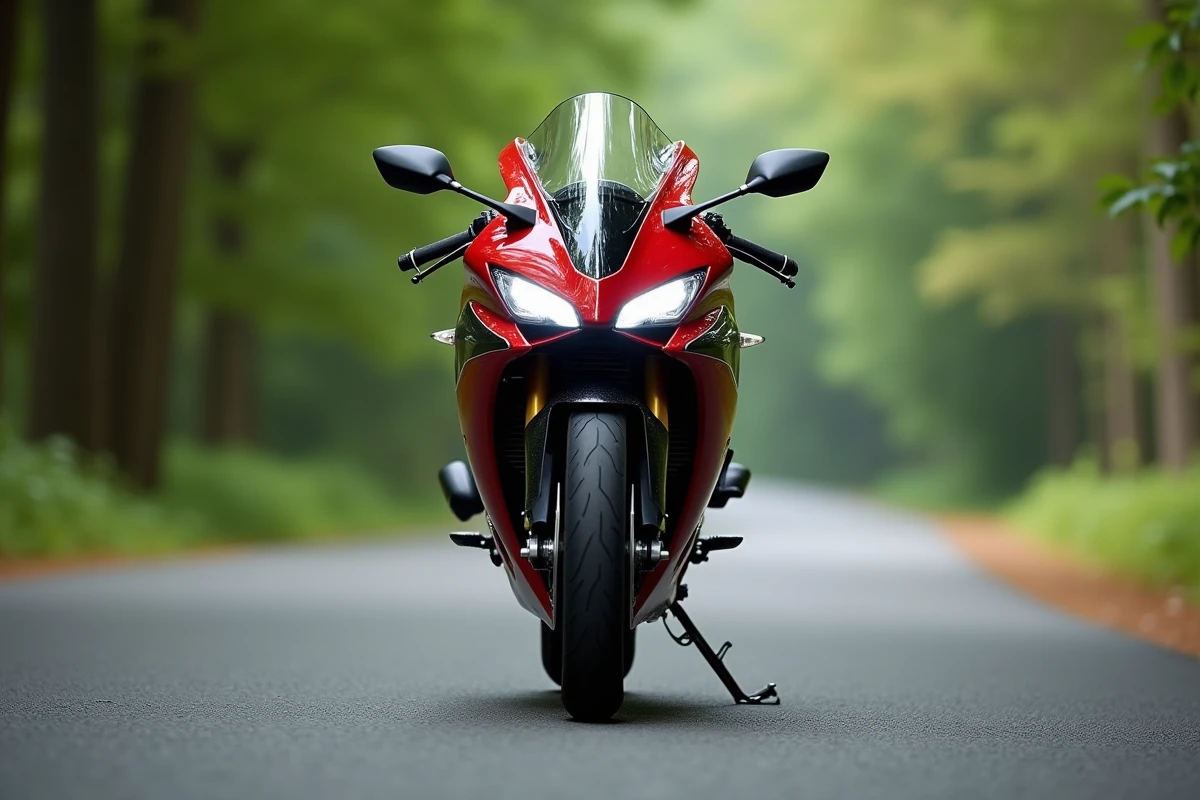
The Honda CBR1000F exists in two distinct generations, identified by their chassis codes: SC24 (1987-1992) and SC25 (1993-1999). Both share an inline four-cylinder engine and a sport-touring purpose, but the design differences directly influence road behavior, long-distance comfort, and ease of maintenance.
Chassis and Frame: What the Transition to SC25 Changed
The SC24 chassis is based on a tubular steel frame, a typical design from the late 1980s. The SC25, introduced in 1993, retains a similar architecture but benefits from revised steering geometry and a reworked swingarm.
On the road, the difference is felt in long, fast curves. The SC25 offers sharper directional stability at sustained speeds, while the SC24 requires more attention from the rider to maintain a clean line on degraded surfaces. Both machines remain heavy by today’s standards, but the weight distribution of the SC25 makes low-speed maneuvers slightly less cumbersome.
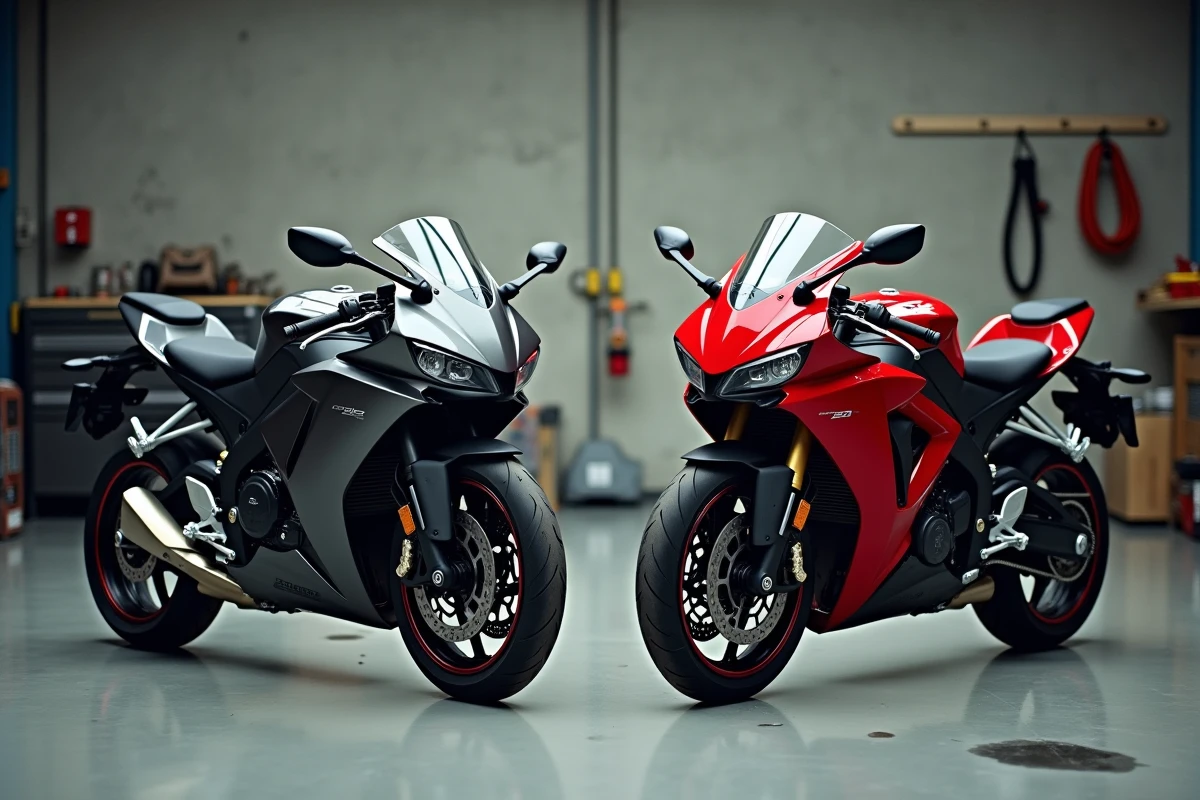
To better grasp the nuances between these two generations in a road context, a comparison between the Honda CBR1000F SC24 and SC25 details the behavioral differences based on road profiles.
Engine and Riding Pleasure on National and Highway Roads
The inline four-cylinder engine remains fundamentally the same between SC24 and SC25. The displacement does not change, and the power claimed at the time was comparable. The real difference lies in the ignition mapping and carburetion management.
The SC25 benefits from modified carburetors that smooth the throttle response in mid-range, exactly the range most utilized on the road. The SC24, with its original carburetion, can be a bit crisper in low-end acceleration, especially when cold or after a long stop.
Vibrations and Long-Distance Engine Comfort
On a journey of several hundred kilometers, the vibrations transmitted to the grips and footpegs differ significantly. The SC25 filters out unpleasant frequencies better at mid-range RPMs. The SC24 vibrates more in this zone, leading to a more pronounced hand fatigue after two hours of continuous riding.
Both machines run very smoothly at a stabilized cruising speed. The Honda four-cylinder from this era is known for its mechanical longevity, and examples exceeding six figures on the odometer are still in circulation.
Braking and Suspension: The Differences That Matter in Road Use
The SC24 features front disc brakes with single-piston calipers. The SC25 upgrades to a more biting system with better-quality calipers. In wet conditions or downhill, this difference is not trivial.
- The SC25 offers a more progressive brake lever feel, allowing for finer modulation when approaching tight corners
- The SC24 brakes adequately but requires more pressure on the lever, which tires the right hand more on winding roads
- Both models deserve a complete brake fluid flush and replacement of the lines with aviation hoses to regain acceptable bite with new pads
On the suspension side, the SC25 has more extensive adjustments at the rear. The SC24 only has adjustable preload. For a rider carrying a load (passenger, soft luggage), the rear suspension of the SC25 adapts better to load variations.
Spare Parts and Maintenance: The Reality of the Current Market
In the used market, SC25 models are significantly easier to find than SC24s. This greater availability also applies to fairing parts, optics, and exhaust systems.
Some specific references for the SC24, particularly for fairings and original lighting, are no longer supplied by Honda (NLA status). Reproductions exist for the SC25, making it easier to restore a damaged or aging example.
- Engine parts (gaskets, rings, timing) remain generally available for both versions due to the common mechanical base
- Specific chassis parts (fairings, turn signals, mirrors) are rarer and more expensive for the SC24
- Online microfiche catalogs allow checking availability before purchase, a useful precaution to avoid an example whose restoration would cost more than the bike itself
ZFE Restrictions and Daily Use: An Often Overlooked Point
Both generations are pre-2000 motorcycles. They do not receive a favorable Crit’Air sticker and are therefore gradually excluded from low emission zones in France. For recreational weekend use, outside the affected urban areas, this poses no problem.
However, a rider considering the CBR1000F as a daily transport option for peri-urban trips must check local regulations. Some cities already prohibit the circulation of these motorcycles during the week. This criterion can weigh as much as dynamic qualities in the final choice.
SC24 or SC25: What Rider Profile for Each Version
The SC24 is aimed at enthusiasts of classic motorcycles willing to invest time in sourcing parts and preventive maintenance. The machine has character, a raw side that appeals to fans of that era.
The SC25 is better suited for regular road use thanks to its more effective braking, more versatile suspension, and less problematic parts availability. Between the two, the SC25 remains the rational choice for riding rather than tinkering, while the SC24 will attract those seeking the authenticity of a late 1980s Honda sportbike.