
A garden that requires little time relies on choices made in advance, not on an accumulation of gadgets or routines. The soil, planting density, and type of ground cover determine the maintenance load for the years to come. Understanding these three parameters allows for a reduction in time spent outdoors without sacrificing the garden’s appearance.
Soil Structure and Cover: The Foundation of a Low-Maintenance Garden
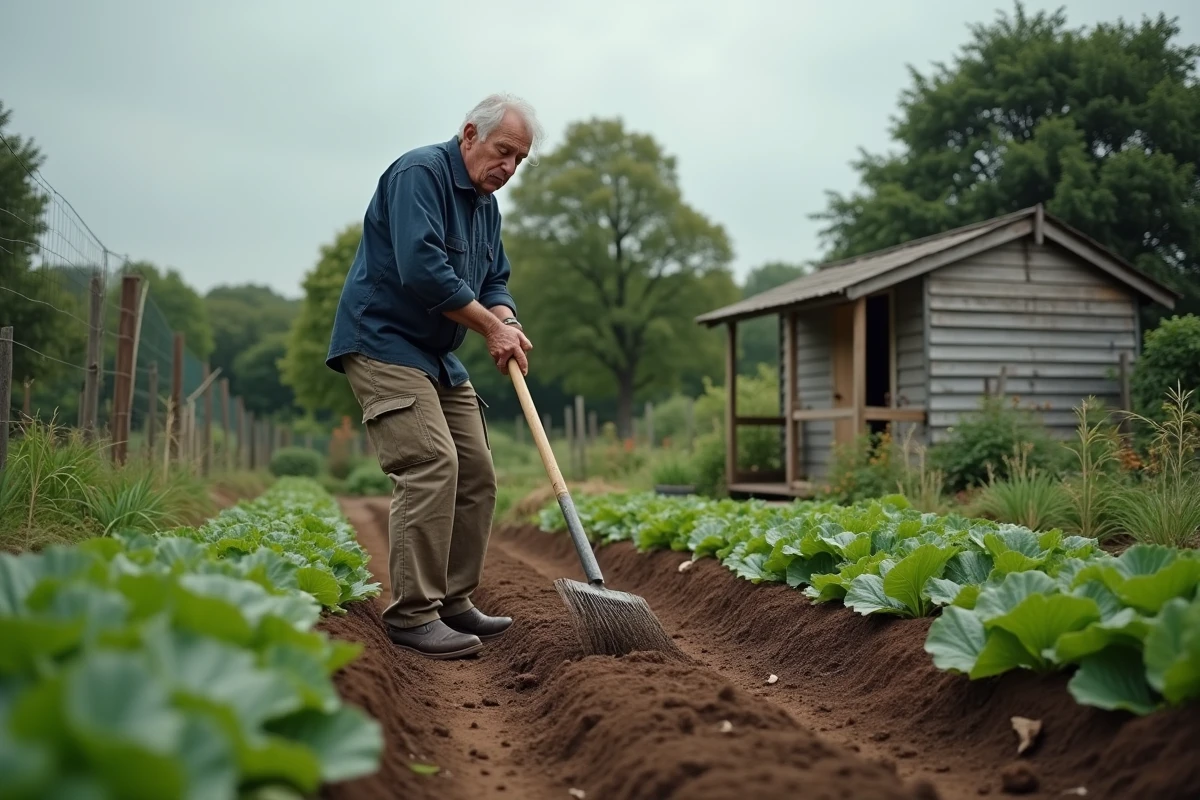
Most recurring chores (weeding, watering, fertilizing) stem from poorly prepared soil or bare ground. Exposed soil dries out quickly, encourages the germination of weeds, and forms a crust after each rain. Correcting this from the start avoids the need for repeated interventions later on.
Organic mulching (wood chip, dead leaves, hemp straw) serves three simultaneous functions: it retains soil moisture, slows the emergence of unwanted grasses, and nourishes microbial life as it decomposes. On clay soil, a coarse-textured mulch also improves surface structure.
To make the most of the garden on Univers du Bricolage, it is essential to combine mulching with sufficient planting density. Well-filled beds leave little room for weeds and create shade at the base of the plants, which limits evaporation.
A mineral mulch (gravel, pumice) is better suited for dry areas and Mediterranean plants. It does not decompose, so it does not nourish the soil, but it almost completely eliminates weeding on paths and terrace edges.
Water-Efficient Plants: Adapting Vegetation to the Real Climate
Since the ban on synthetic pesticides for most non-agricultural uses in France, the choice of plants suited to the soil and local climate has become the main lever to limit interventions. There is no need to fight against summer drought with intensive watering when drought-tolerant plants provide a comparable visual result.
Perennials and Shrubs to Favor
Mediterranean perennials (lavender, gaura, nepeta, yarrow) withstand prolonged dry periods once well-rooted, usually after their second year. They only require annual pruning at the end of winter to remain compact.
- Ornamental grasses (miscanthus, stipa, pennisetum) add movement and texture without regular watering, and their dried foliage remains decorative in autumn.
- Slow-growing evergreen shrubs (dwarf pittosporum, abelia, loropetalum) form stable volumes without frequent pruning, unlike thuja or cherry laurel hedges that grow quickly.
- Ground cover plants (creeping thyme, sedum, ground ivy) advantageously replace grass on slopes or borders, eliminating mowing on these surfaces.
Reducing lawn area is probably the decision that frees up the most time. Every square meter of traditional lawn requires regular mowing, summer watering, and sometimes selective weeding. Partially replacing it with dense beds or gravel areas transforms the maintenance schedule.
Garden Watering: Installing a Simple and Autonomous System
Manual watering with a hose wastes water and takes time. A drip irrigation system installed at the base of the plants delivers water directly to the roots, with a slow flow that promotes infiltration rather than runoff.
Sizing the Installation According to Zones
A well-thought-out garden distinguishes areas according to their water needs. Mediterranean plants, grouped in a dry bed, need no watering after establishment. A vegetable garden or a bed of annual flowers, on the other hand, requires regular watering during the hot season.
Connecting the drip system to a simple timer (battery-operated, no Wi-Fi) is sufficient to automate watering. The optimal setting is to water early in the morning when evaporation is low. Less frequent but longer watering encourages roots to grow deeper, making plants more resilient to heat stress.
Seasonal Garden Maintenance: A Simplified Calendar
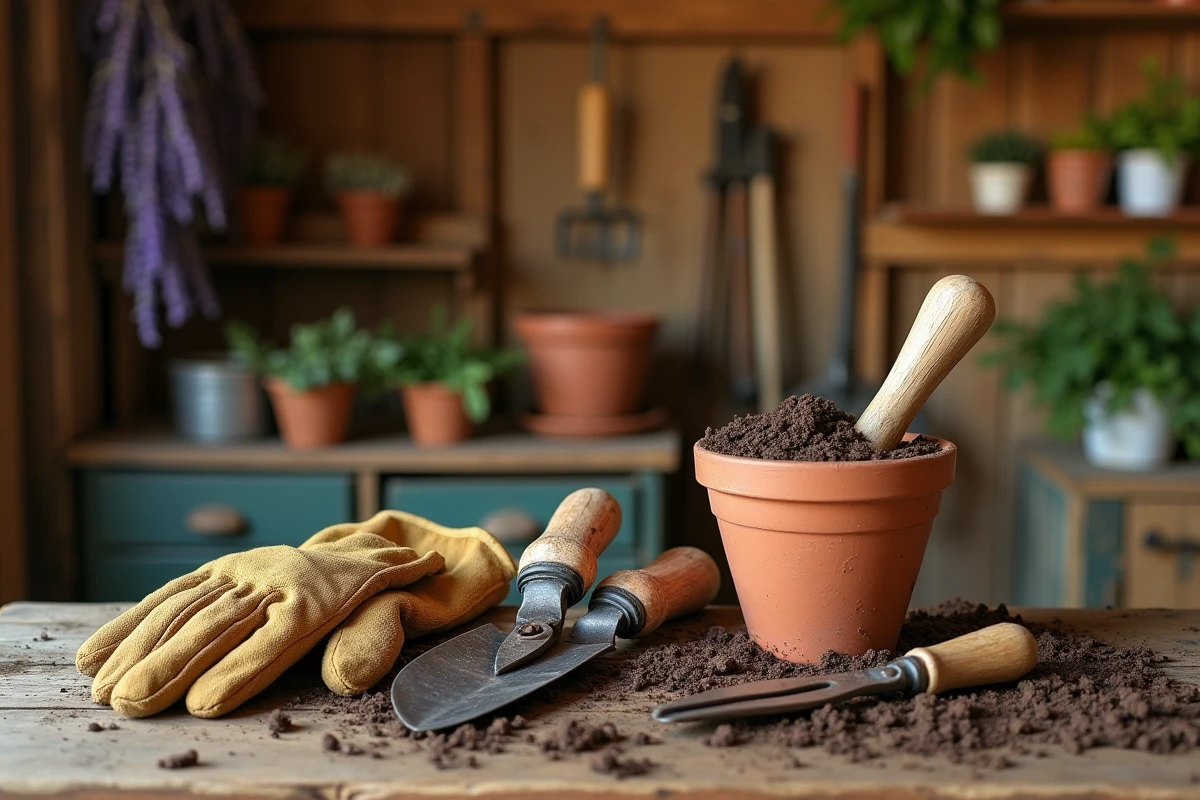
Focusing interventions on a few key moments of the year avoids the feeling of constant maintenance. Two visits per year represent the minimum for a well-kept garden without dedicating every weekend to it.
Late Winter: The Pruning Window
Pruning dry perennials, cutting back grasses, and cleaning beds in February or March prepares for plant growth. It is also the right time to renew the mulch layer before weeds germinate. A sufficient thickness, applied to moist soil, lasts until autumn.
Autumn: Preparing the Soil for Winter
Coarsely gathered fallen leaves make an excellent free mulch for beds. On the lawn, a pass with the mower in mulching mode shreds them and allows them to decompose in place, nourishing the soil effortlessly.
- Planting shrubs and perennials in autumn gives them the whole winter to root, which reduces the need for watering in the first summer.
- Dividing overly dense clumps of perennials at this time allows for refilling gaps in the beds without buying new plants.
- Checking the irrigation system (draining pipes before frost, replacing clogged emitters) avoids unpleasant surprises in spring.
A garden designed to require little maintenance is not a neglected garden. It is a space where every element, from soil choice to bed layout, has been calibrated to work with the climate and terrain rather than against them. The initial years require an investment of time and thought, but the load decreases significantly as the plants settle in and the mulching does its job.