
On a a beauty site that offers facial treatments, makeup tutorials, a cosmetics shop, and a blog, finding a specific page can turn into a puzzle. The main menu is not always sufficient, especially as the catalog grows month after month. This is where a sitemap page comes into play: it provides direct access to all content from a single location.
HTML Sitemap on a Beauty Site: An Alternative Path, Not Just a Simple Inventory
The sitemap page is often reduced to a list of technical links intended for search engines. In practice, its role goes far beyond SEO. It serves as an alternative navigation path for visitors.
Let’s take a concrete example. A customer is looking for a hyaluronic acid serum. She types the term into the site’s search bar, but the result also returns blog articles, routines, and gift sets. On Beauty Inc’s sitemap page, she sees the complete structure and can directly access the product category she is interested in, without going through three filters.
Web accessibility recommendations suggest providing multiple ways to reach the same page: main menu, internal search, breadcrumb navigation, and sitemap. This is not a decorative option. It’s a safety net when traditional navigation does not meet the need.
What Distinguishes a Useful Sitemap from a Dead Page
A poorly designed HTML sitemap resembles a phone directory: hundreds of links without hierarchy that no one consults. For it to be truly useful on a beauty site, links should be structured by logical categories: treatments, makeup, accessories, advice, brands.
- Each link has a clear title (no “page-237” or “click here”), which also helps screen readers
- Categories are visually grouped with clear subtitles, so visual scanning takes a few seconds, not a minute
- Obsolete or out-of-stock pages are regularly removed; otherwise, the sitemap loses its reliability

Accessibility and Sitemap: A Concrete Requirement for Online Beauty Shops
Since June 28, 2025, the European Accessibility Act applies to e-commerce sites selling to European consumers. Online beauty shops are directly affected.
In practice, this means that a sitemap page must be keyboard accessible and compatible with screen readers. A visually impaired visitor using an assistive tool must be able to navigate the sitemap links without encountering inaccessible elements.
Link titles play a central role. A link “Discover” or “Learn more” means nothing to a screen reader listing the links on the page. We prefer “Moisturizing Cream for Sensitive Skin” or “Anti-Aging Care Routine,” which describe the destination.
Checks to Conduct on an Existing Sitemap
If the beauty site already has an HTML sitemap, check a few points before considering the page compliant:
- Keyboard navigation: each link must be reachable with the Tab key, and the tab order must follow the visual logic of the page
- Sufficient contrast between link text and background, including on hover
- Semantic structure with title tags (h2, h3) to separate sections, not just bold or font sizes
- Absence of broken links, which create dead ends for any user
Feedback varies on the rigor of checks depending on the country, but the directive covers the entire European Union. It’s better to anticipate.
XML Sitemap and HTML Sitemap: Two Files, Two Functions on a Beauty Site
The XML sitemap (intended for Google, Bing, and other robots) is often confused with the HTML sitemap (intended for humans). On a beauty site, both coexist and serve distinct roles.
The XML file lists URLs with technical metadata. The lastmod tag must reflect a real content change, not just the automatic regeneration of the file. On a beauty site where product sheets change often (reformulation of a treatment, out of stock, new packaging), this distinction matters. A search engine that receives fake update dates will eventually ignore the signal.
The changefreq and priority values of the XML sitemap are also ignored by engines. There’s no need to spend time adjusting them.
The HTML Sitemap as a Complement to Internal Linking
The internal linking of a beauty site relies on links between blog articles, product sheets, and category pages. The HTML sitemap covers orphan pages that traditional linking often overlooks.
A page “INCI Composition Policy” or a guide on organic certifications may receive no links from the rest of the site. The HTML sitemap makes it accessible to visitors and signals its existence to the robots that crawl the page.
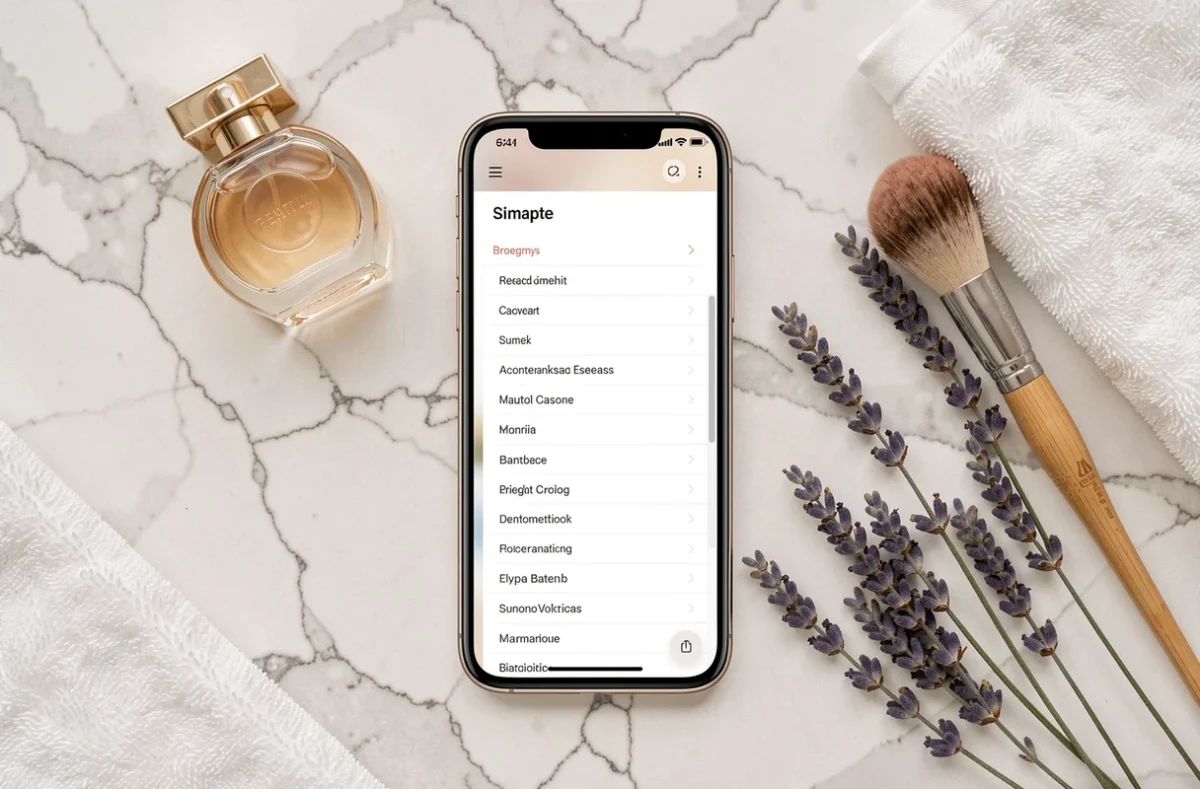
Structuring a Sitemap for a Rapidly Evolving Beauty Catalog
A beauty site is not static. Collections change with the seasons, limited editions appear and disappear, blog articles accumulate. The sitemap must keep pace without becoming an unmanageable document.
The most reliable method is to automatically generate the HTML sitemap from the site’s database. On WordPress, plugins like SEO Press or Yoast offer this function. On Shopify or Prestashop, equivalent modules exist. The advantage: each new page appears in the sitemap without manual intervention.
The trap to avoid is letting the sitemap grow without sorting it. When a beauty site exceeds several hundred pages, segment by content type: one section for products, one for articles, one for institutional pages. A visitor looking for a tutorial does not want to scroll through the delivery conditions list.
A well-maintained sitemap on a beauty site is not just an SEO tool. It shortens the path between the visitor and the content they are looking for while meeting the accessibility requirements now applicable to online shops in Europe. The page deserves as much attention as the main menu.