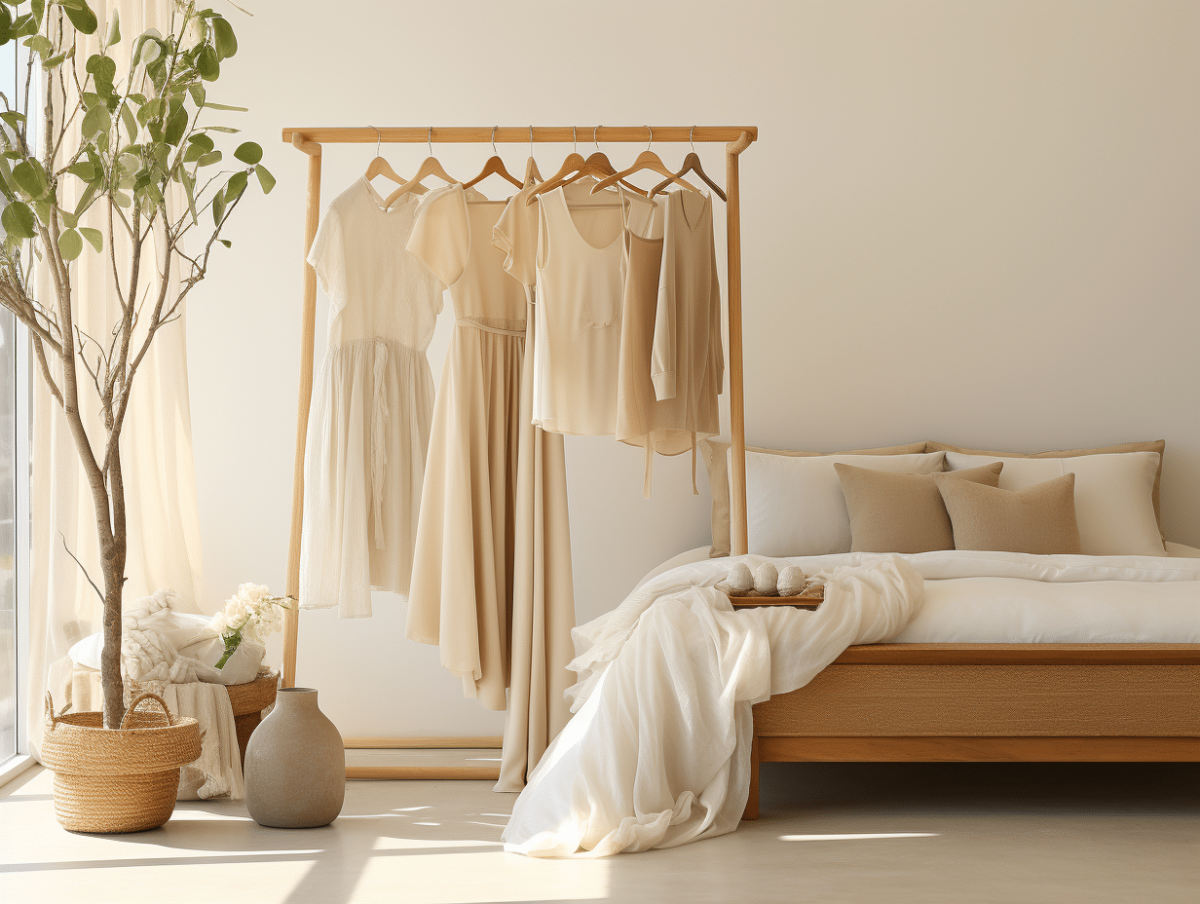
Imagine a personal space where every object breathes tranquility and order, a sanctuary of serenity where the stress of excess is a distant memory. This is where clothing minimalism comes into play, revolutionizing not only our wardrobes but also our domestic well-being. This approach, which involves reducing one’s clothing collection to essential and cherished pieces, resonates with a quest for simplicity and authenticity. It frees us from visual and emotional clutter, fostering a sense of lightness and ease at home.
Clothing Minimalism: A Philosophy for Daily Well-Being
Minimalism enters our lives like a gentle breeze, bringing with it a sense of renewal. This philosophy is based on a fundamental principle: voluntary simplicity. By adopting a minimalist lifestyle, we deliberately choose to part with accessories to keep only the essentials. In the realm of clothing, this translates to a streamlined wardrobe, where each piece is carefully selected for its quality, functionality, and alignment with our personal style.
This lifestyle choice carries considerable benefits for the individual. A minimalist wardrobe means less stress, offering a reduced and coherent selection of clothing that eliminates morning indecision. The result is a feeling of clarity and control, conducive to a serene life. The reduction of consumerism is another positive effect, as it fosters greater awareness of the impact of our purchases, encouraging us to prioritize quality over quantity.
In this process, finding one’s personal style becomes more than an aesthetic quest; it is a path to fulfillment. Shedding superfluous pieces also means freeing oneself from fleeting trends and the dictates of fashion. Advocates of clothing minimalism report a rediscovery of their style, more authentic and assertive, a way of dressing that evokes the freedom felt nude at home.
Clothing minimalism prompts a reflection on our consumption patterns. It is undeniable that the fashion industry is among the most polluting in the world. Reducing our clothing footprint is part of a broader movement for environmental preservation. Choosing less, but better, becomes an act of advocacy for a sustainable future. Minimalism stands as a practice of resistance, a daily action for a fairer and more balanced world.
Building a Minimalist Wardrobe: Practical Tips and Impact on Life Comfort
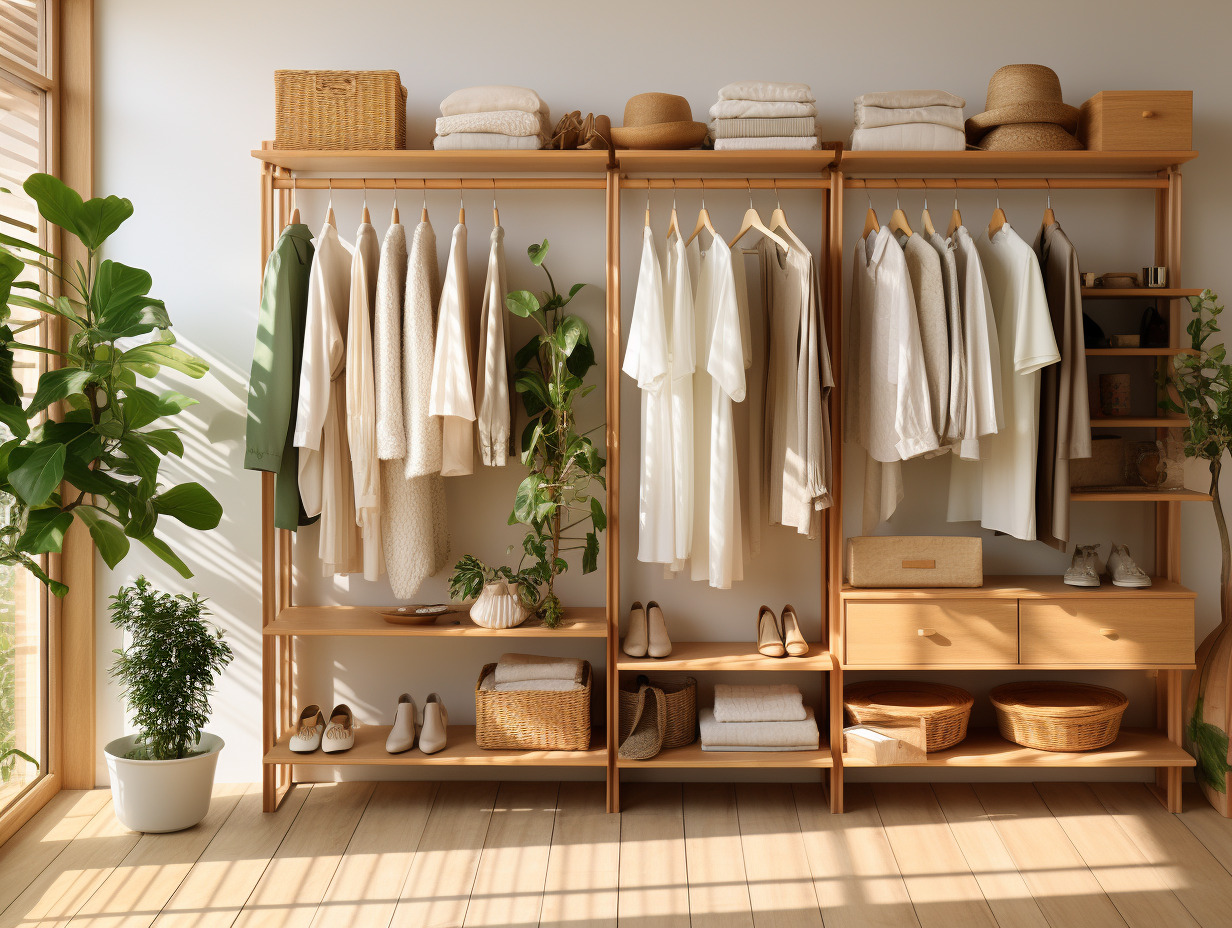
Creating a minimalist wardrobe involves a much deeper exercise of discernment than simply sorting through clothes. It requires adopting a conscious approach, where each piece meets criteria of quality and versatility. Choose clothing that can withstand seasons and trends, favoring neutral colors and timeless cuts. The Capsule Wardrobe method, popularized by Marie Kondo, encourages maximizing available space and focusing on the essentials, thus promoting an orderly and calming home environment.
The impact of such a practice on life comfort is far from negligible. According to studies, a reduced and meticulously curated wardrobe contributes to a less cluttered life, where clothing choices become a daily pleasure rather than a source of indecision. Adopting a minimalist lifestyle allows us to redefine our relationship with consumption. The study highlights that, in the face of a 60% increase in clothing purchases compared to 15 years ago and a lifespan that is half as long, minimalism appears as a remedy for overconsumption.
Indeed, the fashion sector, responsible for 1,715 million tons of emissions in 2015 globally, calls for greater awareness of our environmental impact. Reducing the number of clothing items produced, estimated in France at 600,000 tons annually, and increasing the lifespan of our garments are concrete actions in favor of sustainable development. Minimalism, far from being just a trend, proves to be an ecological action and a vector for personal well-being, uniting domestic comfort and environmental responsibility.