Jannik Sinner was born on August 16, 2001, in San Candido, an Italian municipality nestled in the Dolomites, just a few kilometers from the Austrian border. His passport is Italian, his mother tongue is German, and both of his parents have Germanic first names. This triple reality alone summarizes the cultural complexity of a family that biographical notes often reduce to the mention of “Italian.”
South Tyrol: An Italian Region with a German-speaking Population
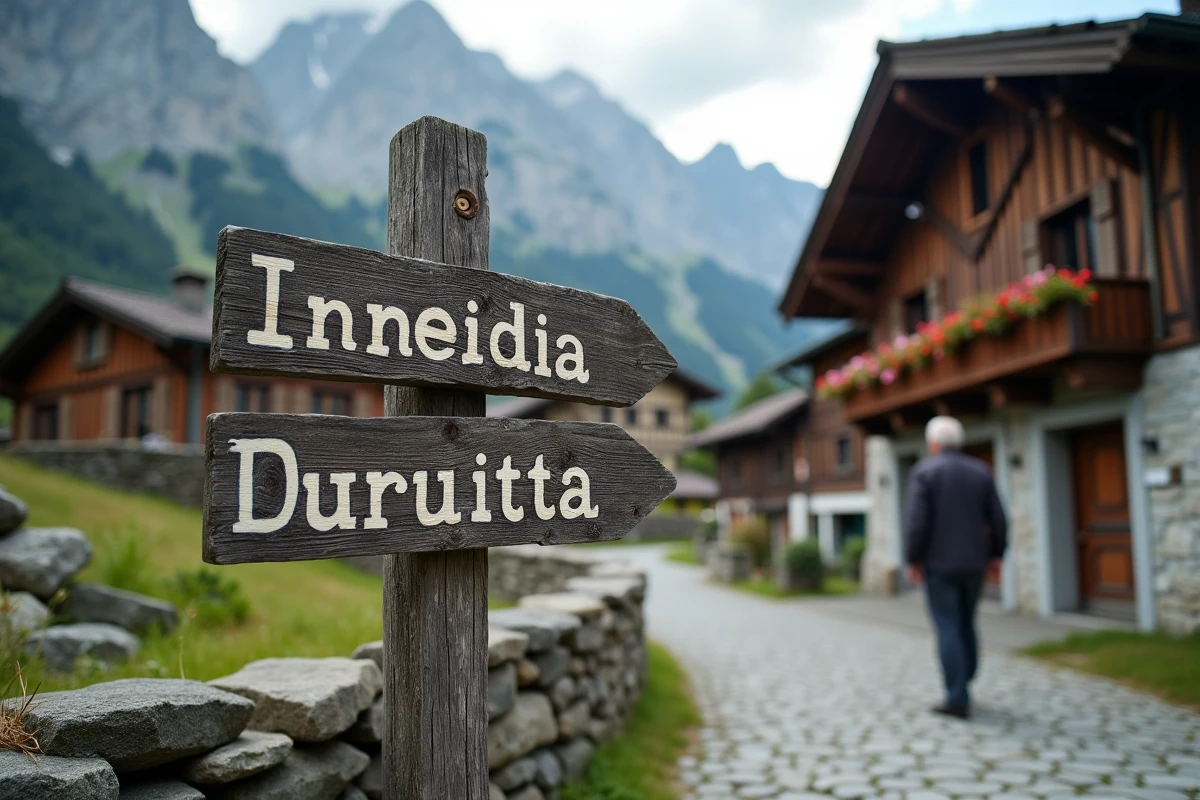
To understand the Sinner family, one must first locate South Tyrol on Italy’s linguistic map. This autonomous province, annexed to Italy after World War I, retains a predominantly German-speaking population. Road signs are bilingual, education is conducted in German in most schools, and the local culture draws from both Vienna and Rome.
San Candido (Innichen in German), Jannik’s hometown, and Sesto (Sexten), the village where he grew up, are located in the Puster Valley, an alpine valley where daily life occurs almost exclusively in German. Family names sound Germanic: Sinner, Rauchegger, Hofer. This context explains why the origin and nationality of Jannik Sinner’s parents often surprise tennis enthusiasts who spontaneously associate Italy with Mediterranean sounds.
South Tyrol operates under a strengthened autonomy status, which guarantees German speakers extensive linguistic rights. Jannik Sinner grew up in this bilingual environment before moving further south to continue his tennis training.
Johann Sinner and Siglinde Rauchegger: Germanic First Names, Italian Passports
Jannik’s father is referred to either as Johann or Hanspeter, depending on the source. His mother is named Siglinde Rauchegger. These first names and surnames are not Italian in the common sense of the term: they belong to the German-Tyrolean tradition of the region.
This dual naming of the father is not anecdotal. In South Tyrol, many German speakers have a common first name different from their legal first name. The Italian administration sometimes registers an Italianized form, while the family uses the local form. Finding two first names for the same person in news articles directly reflects this Italian-German cultural duality.
Both parents worked in the restaurant sector at a ski resort in the region. This professional environment, linked to alpine winter tourism, roots the family in a mountain economy typical of South Tyrol, far removed from the tennis academies in the south of the peninsula.
Mother Tongue and Sporting Identity of Jannik Sinner
Jannik Sinner is fluent in German, Italian, and English. German is his first language, the language of home and primary school. Italian came later, particularly when he left South Tyrol to train in Bordighera, Liguria, under the guidance of Riccardo Piatti.
This linguistic journey has a direct consequence on his career. Sinner represents Italy on the ATP circuit, has contributed to Italian victories in the Davis Cup, and is perceived as a national hero in Italy. His native German language takes a back seat in the media narrative, but it remains a strong marker of his family identity.
Interestingly, Jannik’s first sport was not tennis but skiing, the premier discipline in the Dolomites. This initial choice reflects the parental environment: in a family of restaurateurs at a ski resort, children put on skis before picking up a racket.
How Dual Culture Changes Public Perception
Italian media present Sinner as a national prodigy. German-speaking media from Austria and Germany sometimes claim him as a “child of Tyrol.” This tension, never conflictual, illustrates a common phenomenon in European border regions: legal nationality does not always encompass cultural identity.
For his parents, this distinction seems secondary. Johann and Siglinde Sinner are described as discreet, rarely present in the media, and attached to their life in the Puster Valley. Their son left the family home as a teenager to pursue tennis, but the German-speaking alpine roots remain a structuring element of his story.
Sinner’s Grand Slam Journey and Family Pride
Jannik Sinner’s record in major tournaments adds an extra dimension to the trajectory of this family of German-speaking mountaineers. First Grand Slam title at the Australian Open, followed by victory at the US Open and triumph at Wimbledon: each final and each trophy brings the spotlight back to this player with such an un-Mediterranean surname.
His participation in Roland-Garros, where he reached the final in the 2025 season after a several-month suspension, reignited media attention on his origins. Press portraits then mention Sesto, the Dolomites, skiing, without always explaining why an “Italian” player has a Germanic name and speaks German at home.
The available information about Johann and Siglinde paints a coherent profile:
- Two German-speaking parents born and settled in Italian South Tyrol, legally Italian since always
- A professional background rooted in alpine ski resort hospitality
- A deliberate media discretion, away from the celebrity circuits of professional tennis
- Early support for their son’s sporting choice, first skiing and then tennis from adolescence
Jannik Sinner’s journey on the ATP circuit, with results in Masters and season finals, extends this unique trajectory. Behind the world number one is an ordinary Tyrolean family, whose uniqueness lies in belonging to a linguistic minority within Italy.
The next time Sinner serves on the center court of Roland-Garros or competes in a Masters final, his name will resonate as that of an Italian champion. His parents, on the other hand, will likely continue to comment on the match in German.