
Sleeping on agricultural land raises a legal question that many underestimate: the zoning of the local urban planning plan (PLU) determines almost everything. A plot classified as zone A does not offer the same margins as a zone N or a leisure zone, and the nature of the accommodation (tent, caravan, tiny house, mobile home) modifies the reporting obligations. This article compares the legal situations according to the type of installation and the status of the occupant.
Understanding the rules for sleeping on agricultural land first requires distinguishing between what falls under the Urban Planning Code and what depends on local municipal decrees. The two overlap and create very variable situations from one municipality to another.
Zone A, zone N, leisure zone: what each PLU zoning really allows
The classification in the PLU constitutes the first filter. Before placing anything on a plot, consulting the urban planning document at the town hall remains a mandatory step.
| PLU Zoning | Temporary accommodation (tent, bivouac) | Caravan or camper van | Light habitat (yurt, tiny house) | Permanent construction |
|---|---|---|---|---|
| Zone A (agricultural) | Occasionally tolerated, no permanent rights | Limited parking (generally three months per year) | Subject to authorization, agricultural link required | Reserved for agricultural buildings |
| Zone N (natural) | Occasionally tolerated, variable local regulations | Very restricted, frequent municipal decree | Almost impossible without CDPENAF exemption | Prohibited except for collective facilities |
| Leisure zone (Nl or equivalent) | Allowed according to zone regulations | Possible with prior declaration | Feasible under conditions (HLL) | Prohibited or heavily regulated |
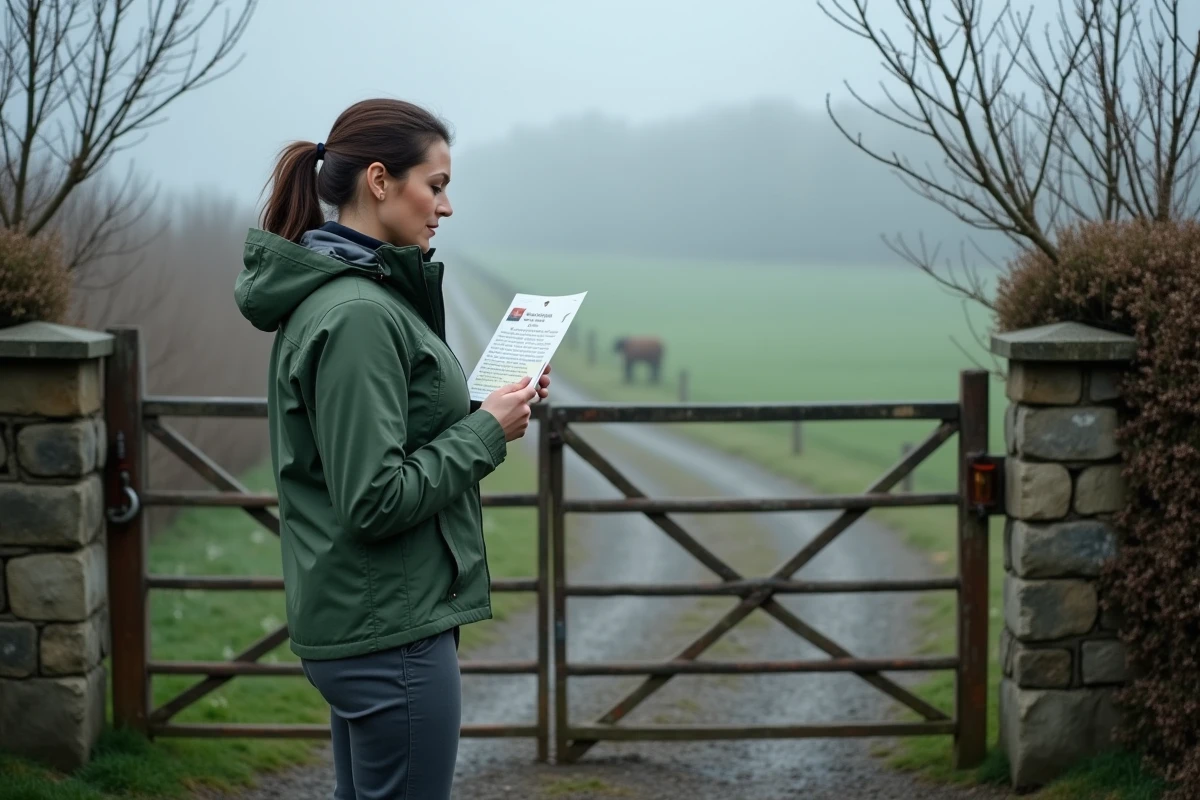
Zone A protects land with agronomic potential. Only constructions necessary for agricultural exploitation are allowed, which by default excludes any leisure or residential accommodation without a direct link to the activity.
In zone N, the logic is similar but oriented towards the protection of natural environments. Municipalities can allow declared campgrounds, but this is rare and always regulated by a specific decree.
Caravan and camper van on agricultural land: the three-month threshold
The Urban Planning Code distinguishes between temporary parking and permanent installation. A caravan can park for less than three months per year without authorization on private land, provided it retains its means of mobility (wheels, tow bar).
Beyond three months, or if the caravan is stabilized on concrete blocks, connected to a water or electricity network, it loses its vehicle status. It then becomes an installation subject to prior declaration, or even to a development permit.
- Mobile caravan, less than three months: no formalities, but prohibition of permanent residential use
- Stabilized or connected caravan: prior declaration at the town hall, often refused in zone A
- Parked camper van: same rules as the caravan, the status of a motor vehicle does not change the situation in urban planning
Extended parking without authorization exposes one to a report of violation of the Urban Planning Code. The town hall can require the restoration of the land, with a daily penalty in case of non-compliance.
Tiny house, yurt, mobile home: light habitat and mandatory agricultural link
Light leisure accommodations (HLL), a category that includes yurts, tiny houses on trailers, and removable cabins, are subject to their own regulations. In agricultural zones, their installation is only legal if the occupant proves a direct link with the exploitation.
Recent decisions from administrative courts confirm that a farmer can install a mobile residence on their plot when they prove a permanent need for supervision (livestock, sensitive crops). The central condition: demonstrate that this on-site presence is essential for the economic viability of the exploitation.
For a non-farmer, the situation is very different. Placing a tiny house on agricultural land without an exploitation activity constitutes a change of destination for the land. The town hall is entitled to refuse any authorization request and initiate a restoration procedure.
The mobile home follows the same logic. Contrary to a widespread belief, a mobile home is not a vehicle: it has neither propulsion means nor towing devices. Its installation requires a prior declaration, and in zone A, it will be refused unless there is a proven agricultural context.

Agricultural test spaces: a regulated exception for temporary habitat
Agricultural test spaces, supported by communities or networks such as ADEAR or the RENETA network, sometimes explicitly provide for the possibility of light or temporary habitat on the test land during the experimentation period.
These schemes rely on standard agreements that precisely outline the conditions:
- Duration limited to the testing period (generally one to three years)
- Only provisional connections, with a requirement for dismantling at the end of the agreement
- Formal prohibition of seasonal or tourist rentals
- Type of habitat restricted: caravan, mobile home, removable tiny house
This framework offers a legal pathway for agricultural project holders who do not yet have buildings on their exploitation. However, it does not concern individuals simply seeking a vacation spot.
Sanctions and controls: what an occupant without authorization risks
Violations of the Urban Planning Code on agricultural land are subject to checks by municipal agents or the Departmental Directorate of Territories (DDT). A report can be drawn up as soon as the first unauthorized installation is observed.
Possible consequences include a formal notice to restore the land, accompanied by a penalty for each day of delay. In the case of criminal proceedings, the correctional court can impose a fine and order the demolition or removal of the installation at the expense of the offender.
Local tolerance does not equate to authorization. Even if a town hall does not act immediately, a change in municipality or a neighbor’s complaint can trigger a procedure years after the installation. The statute of limitations for urban planning violations runs from the moment the works or installations are completed, and it can reach several years depending on the nature of the violation.
Before any installation project on agricultural land, the most reliable approach remains to consult the urban planning service of the relevant town hall and, if the project involves light habitat linked to agricultural activity, to seek the opinion of the Departmental Commission for the Preservation of Natural, Agricultural, and Forestry Spaces (CDPENAF). This commission provides an opinion on requests for changes of destination or construction in zone A, and its unfavorable opinion significantly complicates obtaining a permit.